
Emerson
Automation Experts
Featured Posts
 Industrial AI Is Improving Operator Decision‑Making Without Taking Control July 14, 2026 | Control & Safety Systems, Sustainable Energy - Why this matters now As artificial intelligence adoption accelerates, it is easy to assume that progress requires turning more decisions over to machines. In industrial environments, however, the most valuable AI applications today are those that support operators without removing them from control. That concept is at the center of a recent article by Emerson… Read More
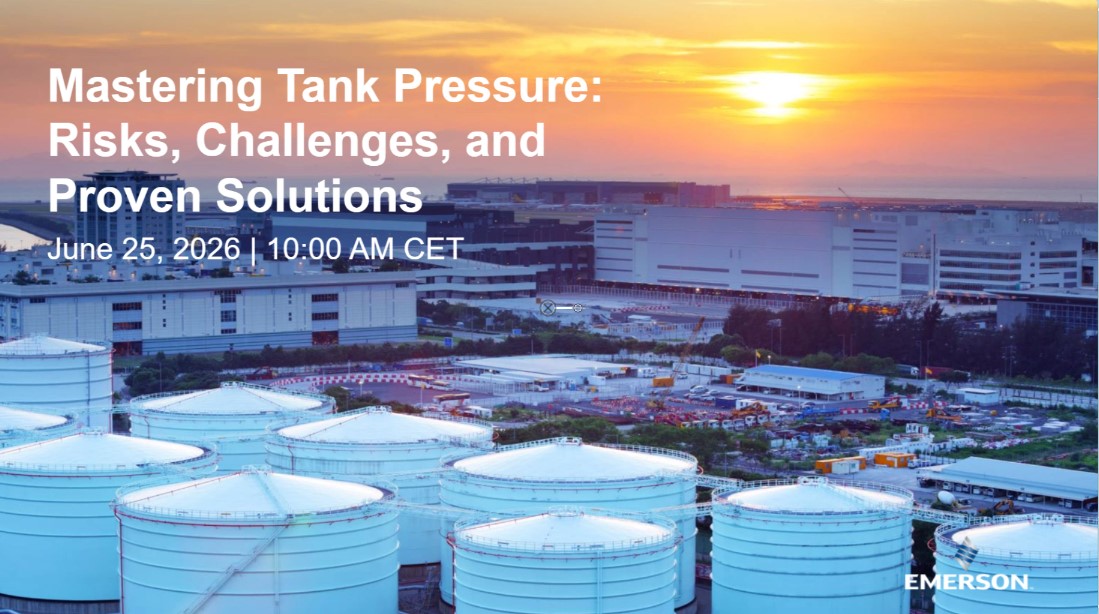 Mastering Tank Pressure: Practical Ways to Reduce Risk, Product Loss, and Emissions July 10, 2026 | Valves, Actuators & Regulators - Storage tanks may look static, but pressure inside them is constantly changing. Filling, emptying, solar heating, rain cooling, vapor generation, inert gas supply, and connected recovery systems can all affect the pressure in the vapor space above the liquid. If those pressure changes are not managed, a tank can exceed its maximum allowable working pressure… Read More
Latest Posts

Power Orchestration Is Becoming Essential for AI Data Center Growth
TL;DR AI data centers are creating unprecedented power demands that resemble grid-scale loads concentrated at a single site. Unlike traditional facilities, AI data centers can experience rapid power consumption swings in seconds or milliseconds. Battery Energy Storage...

AI Data Centers as Critical Infrastructure: Rethinking Control, Cooling, and Automation
In this video podcast, we explore how advanced control techniques like model predictive control (MPC), data fabric architectures, and AI-assisted operations can optimize cooling systems, improve uptime, and manage highly dynamic AI workloads more efficiently.
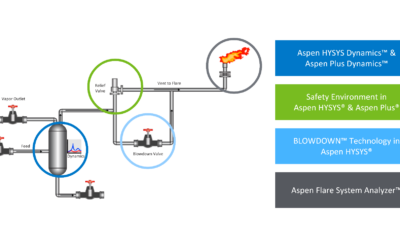
Optimizing Process Safety with Dynamic Modeling and Accurate Flare Design
Flare systems must handle many possible emergencies, and each scenario drives decisions on valve sizes, header diameters, knockout drum capacity, and materials of construction. When relief loads are estimated without accounting for how the process actually responds during an upset, safety equipment tends to be overdesigned, which raises capital expenditures (CAPEX).

Edge Computing Helps Break Down Data Silos and Expand Industrial AI
TL;DR Many OT environments struggle with siloed data created by disconnected systems and technologies. Edge computing helps democratize data by making information more accessible across operations. Remote industries often cannot rely on cloud connectivity alone to...
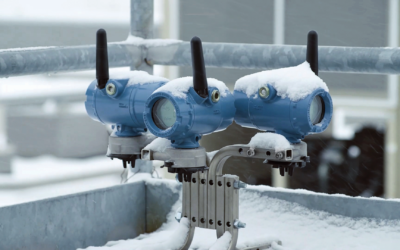
Reliable Wireless Performance Starts with Reliable Power in Cold-Weather Environments
For oil and gas operators, maintaining visibility into critical process measurements is essential, especially at remote well sites, tank farms, and production facilities. In cold-weather environments, power module performance becomes increasingly important because low temperatures can increase internal battery resistance and raise the risk of communication interruptions.

Isolation Valves: The Safety Switches of the Data Center Thermal Network
Cooling is the backbone of any data center, and Tier 3 and Tier 4 facilities run it through parallel loops. Isolation valves let operators take a pump, chiller, or air handler offline while cooling continues through an alternate path. Valve pressure drop also adds to pump load and Power Usage Effectiveness (PUE), so these choices compound across a facility.
Meet Our Bloggers & Experts

Jim Cahill
Chief Blogger, Social Marketing Leader

Todd Walden
Author and Blogger
Systems & Software

Erianne Ferrer
Senior Analyst, Social Media
Discrete Automation

Chiara Ponzellini
Movicon Sales Manager, Europe

Varshneya Sridharan
Sr. Product Manager, Measurement Solutions
Popular Posts

Want to get in touch?
Please do, our experts are here. Contact us so we can continue
the conversation.
Stay up to Date with the Latest News and Updates
Follow Us
We invite you to follow us on Facebook, LinkedIn, X and YouTube to keep up to date on all the latest news, events and innovations to help you take on and solve your toughest challenges.
Want to re-purpose, reuse
or translate content?
Please do, Just link back to the post and drop us a quick email so I can share your work. Thanks!
Our Global Community
Emerson Exchange 365
This blog features expert perspectives from Emerson's automation professionals on industry trends, technologies, and best practices. The information shared here is intended to inform and educate our global community of users and partners.